

How Light Spectrum Influences Diabetic Eye Damage
Key Insights From A Controlled Animal Study

Managing diabetic eye disease typically centers on glycemic control and vascular health—but emerging research suggests that light exposure itself may meaningfully influence retinal outcomes.
A 2017 university-led study from The Technion – Israel Institute of Technology explored how different lighting environments affected cataract progression and retinal function in a diabetic rat model. Best results were achieved when blocking wavelengths below 530nm by up to 90%.
While conducted in animals, the findings offer important perspective for eye care professionals evaluating the role of spectral light management in vulnerable patients.
STUDY OVERVIEW
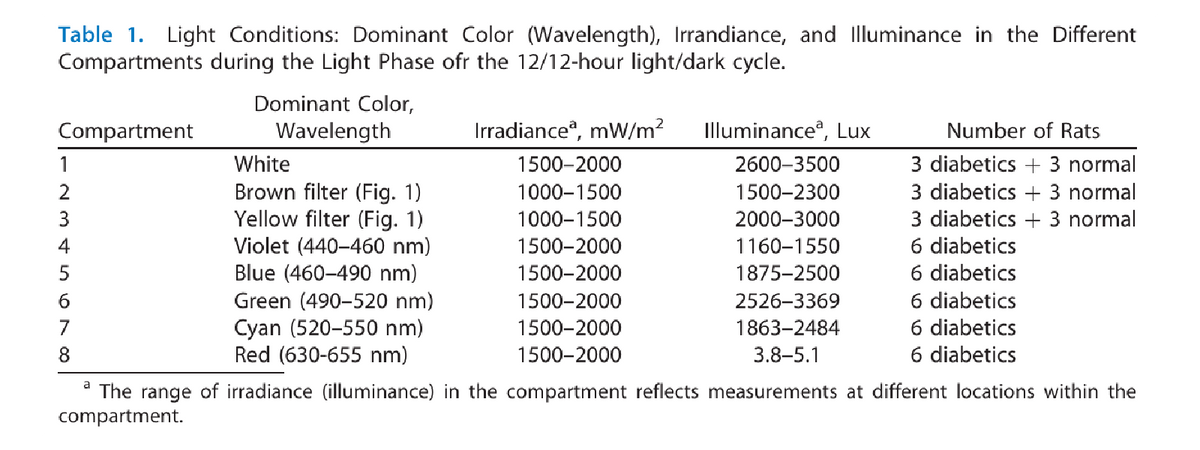
Researchers induced Type 1 diabetes in albino rats and exposed them to controlled 12-hour light/dark cycles under varying lighting conditions. These included:
- Unattenuated white light
- Filtered brown or yellow broadband light
- Narrowband colored light (violet, blue, green, cyan, or red)
All lighting environments were carefully calibrated for irradiance and wavelength composition. Over a 90-day period, investigators tracked:
- Cataract formation
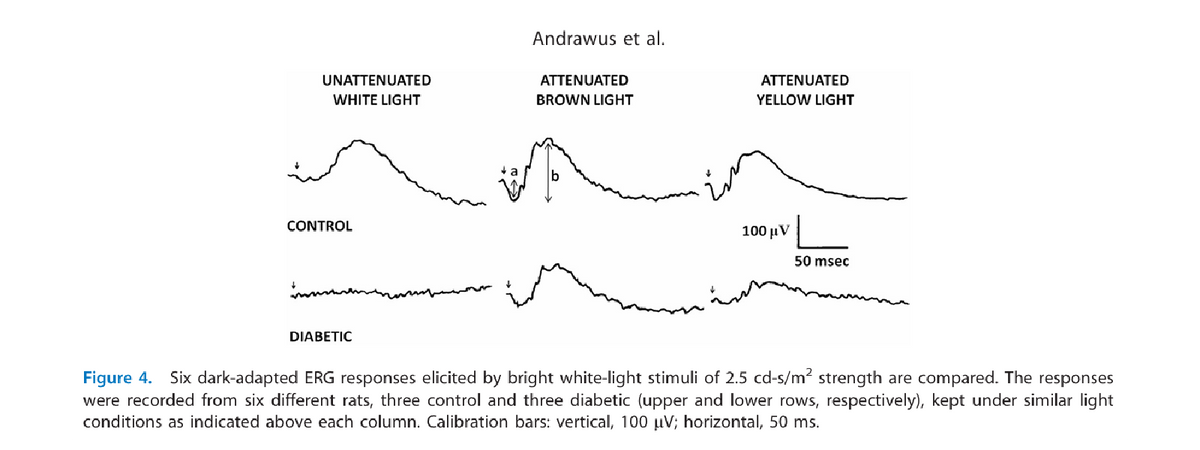
- Retinal function using electroretinography (ERG)
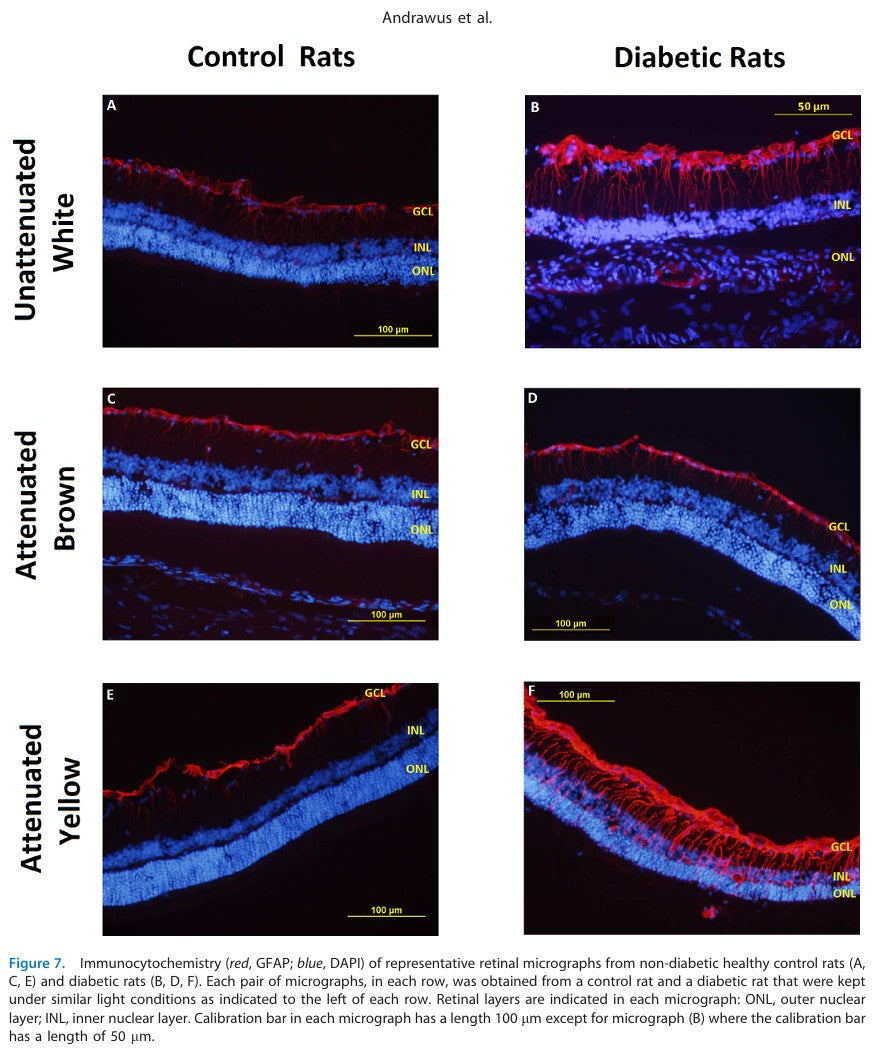
- Retinal stress markers using GFAP immunohistochemistry
This design allowed the team to isolate how both light intensity and wavelength composition interact with hyperglycemia to affect ocular tissues.
KEY FINDINGS RELEVANT TO CLINICAL PRACTICE
Shorter Visible Wavelengths Dramatically Worsened Retinal Outcomes
1. Diabetic rats exposed to bright violet, blue, green, or cyan light (approximately 440–550 nm) showed severe retinal dysfunction, with ERG responses becoming non-recordable within just 42 days. In contrast, rats exposed to red light (630–655 nm) under similar irradiance experienced significantly milder retinal damage—about 50% less— compared with those under standard white light.
The authors note that retinal injury decreased monotonically from short to long wavelengths, consistent with prior photochemical damage research.
2. Filtering Short Wavelengths Slowed Cataract Progression
Although hyperglycemia remained the primary driver of cataract formation, rats kept under attenuated brown or yellow light—both of which reduced transmission of short and medium wavelengths—developed cataracts more slowly than those under unfiltered white or colored light. Cataract progression was delayed by approximately two weeks in filtered-light environments.
3. Broadband Filtering Reduced Retinal Stress Markers
Retinal Müller cell activation (measured via GFAP expression) closely mirrored ERG findings. Diabetic rats exposed to unfiltered white or yellow light showed higher retinal stress, while those under brown-filtered light demonstrated comparatively lower GFAP expression—indicating reduced retinal injury.
Importantly, the brown and yellow filters used in the study differed mainly in their transmission of short wavelengths, with the brown filter blocking more light below ~530 nm and providing greater retinal protection.
CLINICAL TAKEAWAYS FOR EYE CARE PROFESSIONALS
This study reinforces several clinically relevant principles:
- Visible light—particularly shorter wavelengths—can exacerbate retinal dysfunction in metabolically stressed eyes.
- Spectral composition matters, not just brightness.
- Filtering out short and mid-visible wavelengths while reducing overall irradiance demonstrated measurable protective effects in this diabetic model.
The authors conclude that lenses designed to attenuate light exposure and selectively filter wavelengths in approximately the 400–530 nm range may be beneficial for diabetic patients—while also emphasizing that these findings stem from an animal model and cannot be directly extrapolated to humans without further clinical research.
WHY THIS MATTERS
Diabetic retinopathy and early retinal dysfunction often precede visible vascular changes. As ECPs increasingly adopt proactive strategies for patients at elevated retinal risk, this research highlights light spectrum management as a potentially meaningful adjunct—alongside conventional metabolic control.
While human outcomes remain to be validated, the Technion study adds to a growing body of evidence suggesting that reducing exposure to higher-energy visible wavelengths may help moderate retinal stress under disease-related conditions.